

Reader-supported. We may earn a commission on purchases through our links. Disclosure ›
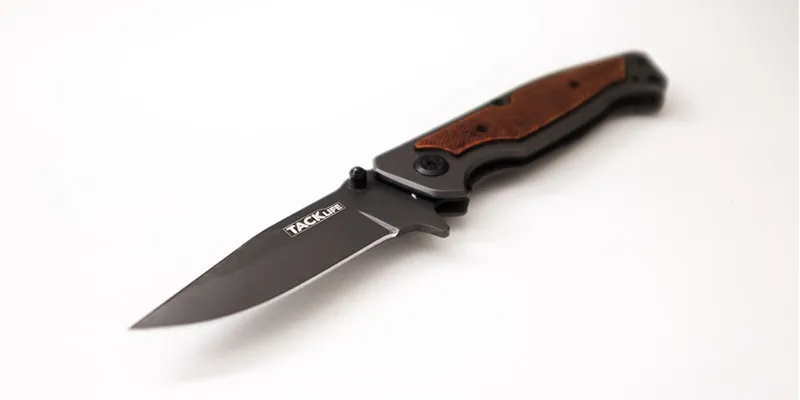
Knives are banned from carry-on baggage on US flights, but most are allowed in checked luggage if packed properly. The only exception in carry-on is plastic knives and round-bladed butter knives. Pocket knives, kitchen knives, hunting knives, and multi-tools all have to go checked, no matter how short the blade is.
The rule is straightforward: TSA bans all sharp blades from the cabin. Once you’re in checked baggage, the rules loosen up considerably, but you still have to wrap the blade so it can’t injure a baggage handler during inspection. Below is the full breakdown by knife type, country, and how to pack so your knife actually arrives at the destination.
TSA Rules for Knives on US Flights
On US flights, all knives are allowed in checked luggage with no blade length restriction. In carry-on, the rule is absolute: no knives except plastic or round-bladed butter knives.
Two practical things to know:
- The blade must be sheathed or wrapped. A loose knife in your suitcase is a hazard for any TSA officer doing a manual inspection. If they cut themselves, you could be held liable, and your knife will likely be confiscated.
- Local state laws apply once you land. TSA enforces federal aviation rules, but state knife laws vary. A switchblade legal in one state might be illegal in another. Check the state knife laws for your destination before flying.
There’s no quantity limit on knives in checked baggage. You can fly with a full kitchen knife set, a hunting collection, or a single pocket knife.
International Knife Rules by Country
Canada
On Canadian flights, knives with a blade length of 6 cm (2.36 inches) or shorter are allowed in both carry-on and checked luggage. That covers small scissors, nail clippers, multi-tools, and most pocket knives. Knives with longer blades go checked.
Switchblades, push-button knives, concealed knives, and disguised knives are completely banned from Canadian flights, even checked. They’re illegal under federal law.
United Kingdom
UK rules only allow knives with blunt ends and blades of 6 cm (2.36 inches) or less in carry-on. Sharp ends or longer blades go checked. In practice, only small round-tipped scissors pass UK carry-on screening. All knives are fine in checked baggage.
EU, Australia, China, and India
EU rules, Australian rules, Chinese, and Indian rules all match the US: no knives in carry-on regardless of blade length, all knives allowed in checked.
New Zealand
New Zealand allows knives under 6 cm (2.36 inches) in carry-on. Multi-tools and pocket knives are measured by overall length, not blade length. If the tool itself measures over 9.5 cm (3.74 inches), it goes checked.
Sources: All country rules above link directly to the official aviation regulator or government site. Rules can change. Always confirm with the airline before flying.
Knives Allowed in Checked Luggage

Knife laws differ by state, region, and country. The list below covers types that are usually legal to fly with in checked baggage, but you should still confirm legality at your destination before traveling with anything unusual.
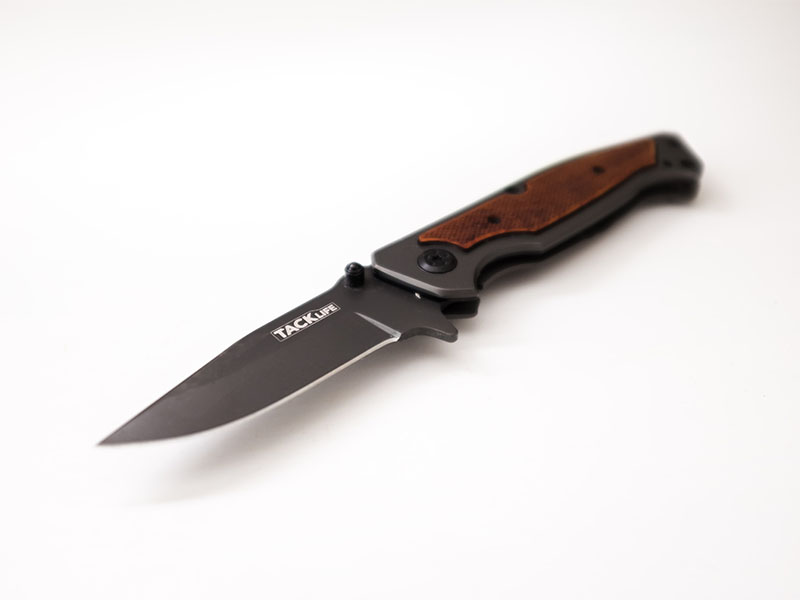
- Pocket knives. Swiss Army knives, multi-tools, and folding knives. Excludes assisted-open knives that deploy with a button or spring.
- Kitchen knives. Including chef knives, paring knives, cleavers, and meat carvers. Pack in a [amazon link=”B07HQN1XV2″ title=”knife roll bag”] for protection.
- Antique and decorative knives. Blunt antique knives are usually fine even with longer blades. Curved knives can be flagged in some regions regardless of sharpness.
- Short fixed-blade knives. Hunting and outdoor knives with blades under 4 to 6 inches (10 to 15 cm) are legal in most US states.
- Damascus knives. Damascus kitchen knives and short fixed-blade Damascus knives travel without issue.
- Plastic toy knives and swords. Banned in carry-on, allowed in checked.
- Balisong trainers. Real butterfly knives are illegal in most places. Trainer butterfly knives without sharp blades are fine even in carry-on in some countries.
Knives That Are Illegal to Travel With
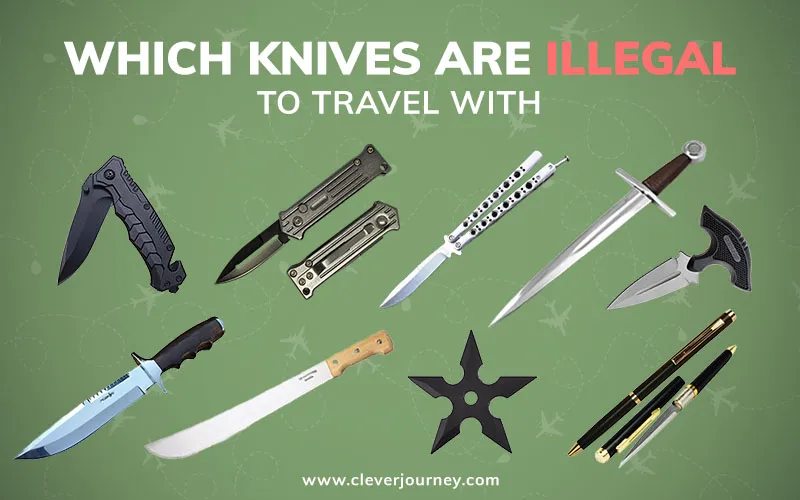
Some knives are illegal in most places regardless of how you pack them. If TSA finds one of these in your checked bag, they’ll likely contact local authorities, which can mean fines, confiscation, and possible criminal charges depending on the state. Most-banned categories:
- Switchblades, flick knives, spring-loaded knives. Some states permit small switchblades, but most ban them. Anything that deploys the blade with a button, spring, or one-handed weighted action falls under this category.
- Daggers and push daggers. Banned in most countries and US states.
- Swords, machetes, and spears. Sharp swords and machetes are restricted as weapons. Some hunting and fishing exceptions exist with proper permits.
- Throwing stars and throwing knives. Hobby use doesn’t matter. They’re treated as weapons in most jurisdictions.
- Knives disguised as everyday objects. Pen knives, comb knives, and similar concealed designs are illegal almost everywhere.
- Real butterfly knives. Trainer versions are usually fine. Sharp-bladed butterflies are banned almost everywhere.
- Long fixed-blade knives. Anything over 4 to 6 inches (10 to 15 cm) of fixed blade is illegal in most US states. Hunting and fishing licenses can create exceptions.
How to Pack Knives in Checked Baggage
The rule from TSA is simple: the sharp edge has to be covered so a baggage inspector can’t accidentally cut themselves. Loose knives in a suitcase don’t pass this bar.
Four ways that work:
- Cardboard sheath. Cut two pieces of cardboard about an inch longer than the blade, sandwich the blade between them, and tape it shut with duct tape. Cheap, fast, and effective for any knife you don’t have a holster for.
- Paper and tape. Wrap the blade tightly in paper or napkins first to keep tape residue off the steel, then wrap the whole thing in duct tape.
- Knife holster. A [amazon link=”B0799H2X1S” title=”leather knife holster”] or fabric sheath is the cleanest option for a knife you fly with regularly.
- Dedicated case or roll. The most secure option is a [amazon link=”B0BZS3PB8Q” title=”hard knife case”] or a [amazon link=”B07HQN1XV2″ title=”fabric knife roll”]. Worth the cost for kitchen knife sets or expensive collector pieces.
One thing socks don’t do: protect your suitcase. The blade tip will push through fabric and rip the lining. Use cardboard or a real sheath.
Frequently Asked Questions About Bringing Knives on Planes
<!– wp:rank-math/faq-block {"questions":[{"id":"faq-question-knives-1","title":"Can I bring a knife in checked luggage on international flights?","content":"Yes, in most countries. Almost every aviation regulator allows knives in checked baggage, but two rules apply everywhere: pack the blade securely with the sharp edge covered, and avoid bringing knives that are illegal in your destination country (switchblades, butterflies, disguised knives, and overly long fixed blades). When in doubt, check the destination country's aviation authority before flying.","visible":true},{"id":"faq-question-knives-2","title":"Do I have to declare knives in checked luggage?","content":"In the US, no. TSA only requires declarations for firearms, large quantities of medication, and similar items. Sharp objects don't require declaration. That said, voluntarily declaring at check-in is smart, especially internationally. Some countries do require it. If you bought a knife abroad and you're flying back to the US, you should declare it at customs and may owe import duty.","visible":true},{"id":"faq-question-knives-3","title":"What size knife is legal to bring on a plane?","content":"In US checked baggage, no blade length limit applies. Other states and countries cap legal blade length at 4 to 6 inches (10 to 15 cm) once you arrive, so the issue isn't TSA, it's local law at your destination. In carry-on, the US bans all knives. Canada, the UK, and New Zealand allow short knives (under 6 cm) in carry-on. Always check destination knife laws before flying.","visible":true},{"id":"faq-question-knives-4","title":"What are the current TSA knife rules?","content":"TSA does not allow any knives in carry-on baggage with one exception: plastic knives and round-bladed butter knives. There's no exception for short folding knives, even though Canada and a few other countries allow them. In checked baggage, TSA permits virtually any knife provided the blade is secured. TSA officers don't make legal calls on knife type, but they will involve local police if a knife appears illegal under state or federal law.","visible":true},{"id":"faq-question-knives-5","title":"Are there any TSA-approved knives for carry-on?","content":"Not really. In 2013 TSA proposed allowing knives with blades under 2.36 inches in carry-on, but the rule was scrapped after pushback from flight attendants and pilots. Plastic knives and round-bladed butter knives are technically allowed, but even those get confiscated occasionally at the agent's discretion. If you absolutely need a knife in carry-on, the [amazon link="B00GU0C4NK" title="HumanGear plastic utensil set"] is cheap enough to surrender if challenged.","visible":true},{"id":"faq-question-knives-6","title":"Are pocket knives allowed on planes?","content":"In carry-on, pocket knives are banned in the US, UK, EU, Australia, China, and India. Canada and New Zealand allow short pocket knives in carry-on (under 6 cm blade in Canada, under 9.5 cm tool length in New Zealand). The [amazon link="B00005ML8D" title="Victorinox Swiss Army MiniChamp"] meets both Canadian and New Zealand limits at 5.8 cm tool length and 3.2 cm blade.In checked baggage, pocket knives are allowed virtually everywhere with no length limit on most flights.”,”visible”:true},{“id”:”faq-question-knives-7″,”title”:”Can I bring cutlery on a plane?”,”content”:”In US carry-on, forks and spoons are allowed. Round-bladed butter knives are also allowed. Sharp dinner knives or steak knives have to go checked. In other countries, the rule is usually the same: anything that’s not pointed or sharp is fine in carry-on.
Expensive cutlery sets are safer in carry-on (with butter knives only) than checked, since checked bags occasionally get lost or stolen from.
Read Next: Can I Bring Can Openers on Planes?“,”visible”:true},{“id”:”faq-question-knives-8″,”title”:”How do I prevent my knife from being stolen in checked luggage?”,”content”:”There’s no foolproof method. Theft from checked bags is statistically rare but not impossible, and a nice-looking knife case can attract attention. Two practical tactics: use a plain plastic bag or beat-up case instead of a fancy display box, and pack the knife between layers of clothing rather than near the bag’s edges. Some travelers wrap the knife bag in something visually unappealing (a stained cloth, a dirty shoe bag) which makes the wrapped item less attractive to a casual thief looking through bags quickly.”,”visible”:true}]} –>
Can I bring a knife in checked luggage on international flights?
Do I have to declare knives in checked luggage?
What size knife is legal to bring on a plane?
What are the current TSA knife rules?
Are there any TSA-approved knives for carry-on?
Are pocket knives allowed on planes?
In checked baggage, pocket knives are allowed virtually everywhere with no length limit on most flights.
Can I bring cutlery on a plane?
Expensive cutlery sets are safer in carry-on (with butter knives only) than checked, since checked bags occasionally get lost or stolen from.
Read Next: Can I Bring Can Openers on Planes?
How do I prevent my knife from being stolen in checked luggage?
Bottom Line
If you’re flying within the US: keep all knives in checked baggage with the blade properly wrapped. Plastic and butter knives are the only carry-on exceptions.
If you’re flying internationally: same rule for the flight itself, plus check the destination country’s local knife laws before you land. A pocket knife that’s perfectly legal back home can land you in trouble at customs in the wrong country.
For an expensive knife you don’t want to risk losing or having stolen, the cleanest solution is to ship it ahead via UPS or FedEx and pick it up at your destination. Mailing costs about $20 and you skip the airline liability question entirely.
Find Out the Packing Rules for Similar Items
Author

Can I bring something else on a plane? Search TSA rules ›