

Reader-supported. We may earn a commission on purchases through our links. Disclosure ›
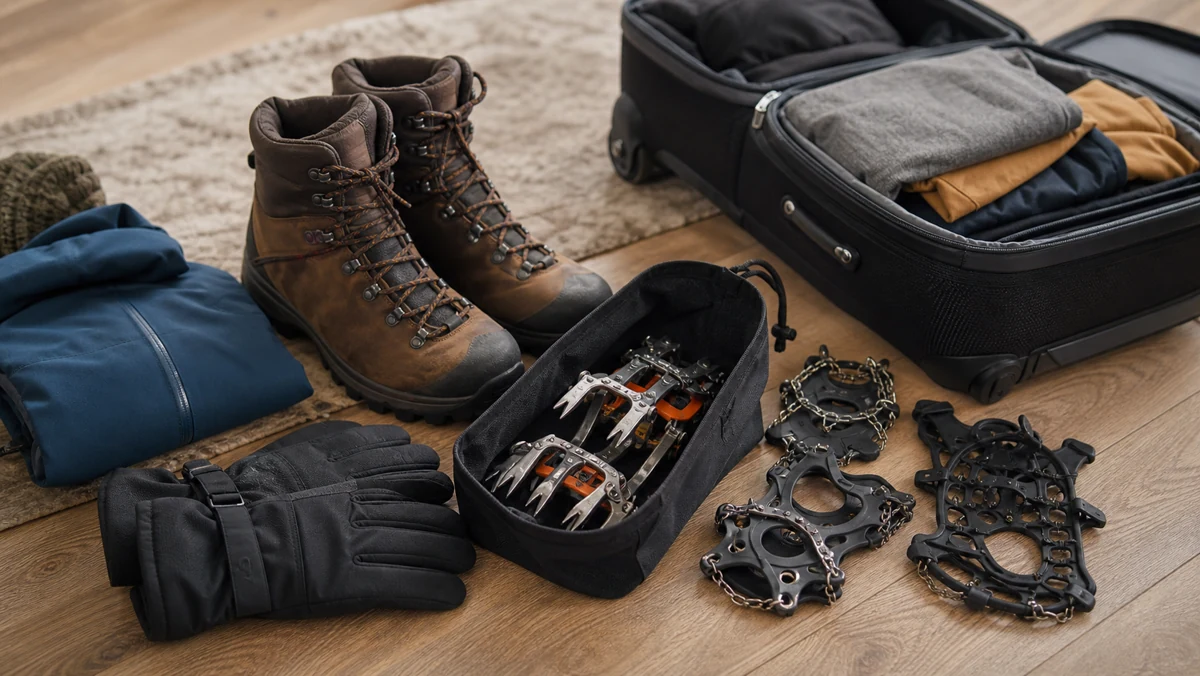
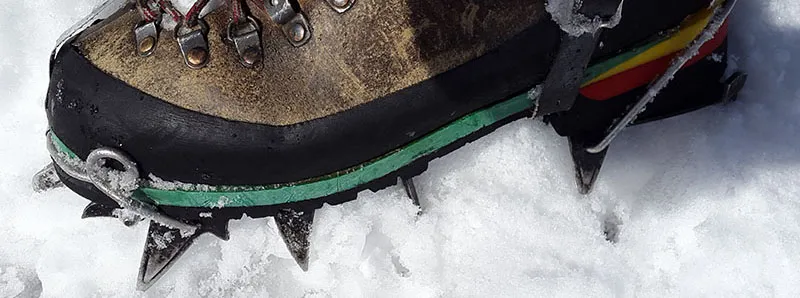
Yes, you can bring crampons on a plane, but checked luggage is usually the safer choice. TSA says crampons are generally permitted in carry-on bags, and the final decision rests with the TSA officer at the checkpoint. Because crampons have sharp metal points, full mountaineering crampons can still create extra screening or a judgment call.
If you are flying for winter hiking, pack full crampons in checked luggage when you can. Microspikes and Yaktrax-style traction devices are usually less concerning, but they should still be packed cleanly, covered, and easy to inspect.
Helpful winter-gear packing picks
These affiliate links are for protecting sharp traction gear and packing it more cleanly.
Point protection
Crampon storage case
Keeps metal points from tearing clothing, packs, or checked luggage liners.
Cover sharp points before travel.
Lower-risk traction
Microspikes traction cleats
Usually easier to pack than technical mountaineering crampons, though TSA discretion still applies.
Checked luggage is still the calmer option.
Packing
Heavy-duty gear pouch
Useful for separating dirty winter hiking gear from clothing and electronics.
Clean mud and trail debris before flying.
Crampons on Planes: Quick Rules
- TSA rule: crampons are generally permitted in carry-on bags.
- Final decision: the TSA officer can still stop an item at the checkpoint.
- Best packing choice: checked luggage for full metal crampons.
- Microspikes: usually easier than technical crampons, but still pack them covered.
- Tent stakes and ice axes: do not assume the same rule. Many sharp outdoor items have stricter rules.
Can You Bring Crampons in Carry-On?
TSA’s official crampons page says they are generally permitted in carry-on bags. That does not mean every checkpoint experience will be identical. Long, sharp, aggressive points may receive closer inspection, especially if they are loose in the bag or packed with other dense metal gear.
If you only have carry-on luggage, use a protective point cover or hard case, keep the crampons clean, and place them where you can remove them quickly. Do not pack them loose near snacks, clothing, or electronics.
The carry-on rule for crampons on planes is permissive, but not risk-free. Pack them like a sharp outdoor tool that may need a quick explanation.
Why Checked Luggage Is Safer for Full Crampons
Checked luggage avoids the main problem: a sharp item being evaluated at the passenger checkpoint. Full mountaineering crampons are awkward, pointed, and easy to misunderstand when buried in a carry-on.
Before checking them, cover the points so they cannot puncture the bag or injure baggage inspectors. A crampon case, heavy fabric wrap, or thick cardboard guard works better than a thin plastic bag.
If you are asking “can I bring crampons on a plane” and you have a checked bag anyway, checking them is the least stressful option.
What About Microspikes, Yaktrax, and Traction Cleats?
Microspikes and Yaktrax-style devices are not the same as technical crampons. They are usually smaller, flexible traction devices for icy sidewalks or moderate winter trails. They are still metal or hard-rubber traction gear, so pack them like something a security officer may want to see.
GSC data for this page shows readers are also asking whether they can bring Yaktrax and microspikes on a plane. The practical answer is: pack them in checked luggage if available; if carry-on only, cover them, keep them clean, and be ready for inspection.
For crampons on planes, microspikes are usually the easier version of the problem because the points are shorter and the device looks less like a technical climbing tool.
6 Risky TSA Mistakes to Avoid
- Leaving points uncovered. Cover sharp points before the bag is handled.
- Packing dirty gear. Mud and snow residue make screening messier and can create customs or agriculture issues internationally.
- Mixing crampons with electronics. Dense metal next to laptops and chargers makes the bag image harder to read.
- Assuming all hiking gear has the same rule. Ice axes, knives, fuel, and tent stakes can have different restrictions.
- Using a flimsy bag. Points can tear fabric and expose the gear.
- Forgetting the officer has discretion. Even generally allowed items can be denied if they seem unsafe.
Other Winter Hiking Gear to Check First
Before you fly, review the rest of your winter kit. Trekking poles, tent stakes, stove fuel, knives, avalanche gear, lithium battery devices, and tools may have their own rules. For broader item checks, start with our What Can I Bring on a Plane guide and TSA’s official item search.
If your trip involves hiking gear beyond traction devices, our fishing gear TSA guide is a useful comparison because it explains how sharp outdoor equipment is often treated.
If you ask “can I bring crampons on a plane” at the airport, the most practical answer is to show the gear clearly, explain that it is hiking traction equipment, and accept that the officer can still make the final call.
For carry-on-only winter trips, “can I bring crampons on a plane” becomes a risk question rather than a simple yes-or-no rule. Microspikes are easier to justify than aggressive mountaineering crampons, but both should be packed cleanly and covered.
The safest crampons on planes plan is still simple: check full metal crampons when possible, carry on smaller traction devices only when you are comfortable with a possible inspection.
The practical answer for most travelers
If you are flying with crampons, pack them in checked luggage unless you are willing to risk losing them at the checkpoint. TSA lists crampons as generally permitted in carry-on bags, but the officer screening your bag can still decide that sharp metal points are not safe in the cabin.
That matters most for expensive mountaineering gear or trips where you cannot easily replace it at your destination. A padded case, covered points, and checked luggage are the least stressful option.

FAQs
Are crampons allowed in carry-on luggage?
TSA lists crampons as generally permitted in carry-on bags, but the final decision rests with the officer at the checkpoint. Because crampons have sharp points, carry-on is still a risk.
Should I pack crampons in checked luggage instead?
Yes, checked luggage is the better choice for most travelers. It reduces the chance of a checkpoint disagreement and protects expensive winter gear from being surrendered before your flight.
Can I bring microspikes or Yaktrax on a plane?
Microspikes and traction cleats are easier to pack than technical crampons, but sharp metal traction can still raise questions at security. If the trip depends on them, put them in checked luggage.
Can I wear traction cleats through airport security?
No. Do not wear crampons, microspikes, or traction cleats through the checkpoint. Pack them in a bag with the points covered so they can be screened safely.
How should I pack crampons for a flight?
Clean them, dry them, cover the points, strap the two pieces together, and put them in a crampon case or thick pouch. Then place that pouch away from fragile items and bag linings.
Are ice axes allowed with crampons?
Ice axes, ice picks, and many sharp climbing tools should go in checked luggage. Do not assume that because crampons may be permitted in carry-on, every winter climbing tool will be treated the same way.
What happens if TSA says no to crampons at the checkpoint?
You may need to place them in checked luggage, give them to someone outside security, mail them if the airport has that option, or surrender them. That is why checked luggage is the safer plan.
Are dirty crampons a problem when flying internationally?
They can be. Some countries are strict about soil, seeds, and organic material on outdoor gear. Clean and dry crampons before packing them, especially when crossing borders for hiking or climbing trips.
Author

Can I bring something else on a plane? Search TSA rules ›