

Reader-supported. We may earn a commission on purchases through our links. Disclosure ›
Yes, you can bring sports and outdoor gear on a plane, and almost all of it is allowed in checked bags. The carry-on answer depends on four questions TSA and the FAA ask of every item: can it be swung like a club, is it sharp, does it hold a lithium battery, and does it hold fuel or compressed gas. Bats, clubs and heavy weights stay out of the cabin. Hooks, stakes, axes and knives go in checked bags. Batteries ride in the cabin and never in the hold. Fuel and pressurized gas mostly do not fly at all.
This page covers those four rules and 24 kinds of gear people ask about, from bicycles and skateboards to fishing tackle, crampons, tents, camp stoves, scuba tanks, parachutes and dumbbells. Each section gives the carry-on answer, the checked-bag answer, the thing that actually gets gear taken, and the TSA or FAA page it comes from. Where TSA publishes no entry (surfboards, folding chairs, dumbbells, resistance bands, lanterns, scuba regulators) the text says so and names the rule that applies instead.
On this page
- The four rules behind every answer
- Quick answers: all 24 items
- Bicycles and folding bikes
- Bicycle pumps
- CO2 cartridges
- Bicycle locks
- Electric air pumps
- Scooters, e-scooters and e-bikes
- Skateboards and longboards
- Helmets
- Golf clubs and golf balls
- Fishing rods and tackle
- Surfboards, skis and snowboards
- Snowshoes
- Crampons and microspikes
- Ice axes and climbing gear
- Trekking poles
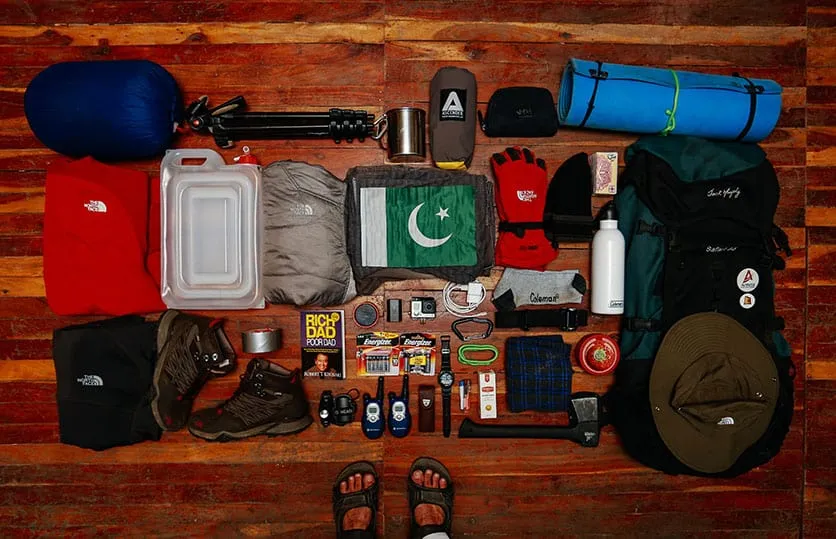
- Tents, poles and stakes
- Sleeping bags
- Camping lanterns, stoves and fuel
- Folding chairs
- Scuba tanks and dive gear
- Parachutes
- Dumbbells and kettlebells
- Resistance bands
- Yoga mats
- Carts and wagons
- Bats, sticks, rackets and balls
- Frequently asked questions
The four rules behind every answer
- The bludgeon rule. TSA’s wording, printed on the pages for bats, clubs, sticks and bowling balls: sports equipment that can be used as a bludgeon is prohibited in the cabin and must be transported in checked baggage. Anything heavy and swingable is a checked-bag item.
- The sharp-objects rule. Knives, large hooks, tent stakes, ice axes and sharp-tipped poles are not allowed in carry-on bags. In checked bags TSA asks that any sharp object be sheathed or securely wrapped so it cannot injure a baggage handler.
- The lithium battery rule. The FAA caps batteries at 100 Wh without approval and 160 Wh with airline approval, and spare batteries go in carry-on only. Anything over 160 Wh is prohibited in both bags, which is why most e-scooters and e-bikes cannot fly with their batteries. The full rule is in our electronics guide.
- The fuel and gas rule. Camp stove fuel, propane and butane canisters, lighter fluid and bear spray are forbidden in both bags. Compressed gas cylinders, including CO2 cartridges and scuba tanks, pass only when they are visibly empty with the valve removed.
Two more things apply to everything on this page. Large items are limited by the airline’s size and weight rules even when TSA allows them, which is why TSA’s own verdict on bikes, tents and scooters is “check with airline”. And every TSA item page ends with the same sentence: the final decision rests with the TSA officer at the checkpoint.
Quick answers: all 24 items
| Item | Carry-on | Checked bag | The catch |
|---|---|---|---|
| Bicycle | Check with airline | Check with airline | Boxed, oversize fee, airline rules. |
| Bicycle pump (hand) | Yes | Yes | None. |
| CO2 cartridges | No | No | Only a visibly empty cartridge passes. |
| Bicycle lock | Yes | Yes | Not listed by TSA. Chains are Yes/Yes. |
| Electric air pump | Yes | Yes, built-in battery only | Spare lithium batteries carry-on only. |
| Kick scooter | Check with airline | Check with airline | Size limits, no TSA entry. |
| E-scooter, e-bike, hoverboard | Battery under 100 Wh only | Battery under 100 Wh only | Over 160 Wh is prohibited; most are over. |
| Skateboard, longboard | Yes | Yes | Airline size and weight limits. |
| Helmet | Yes | Yes | None. |
| Golf clubs | No | Yes | Bludgeon rule. Balls and tees are fine. |
| Fishing rod | Yes | Yes | Airline size limit for carry-on. |
| Hooks, lures, fillet knife | Small lures yes | Yes | Large hooks and knives sheathed in checked. |
| Surfboard, skis, snowboard | Yes | Yes | Airline oversize rules decide. |
| Snowshoes | Yes | Yes | None. |
| Crampons | Yes, officer’s call | Yes | Snow cleats and microspikes are No in carry-on. |
| Ice axe, ice pick | No | Yes | Sheathed. |
| Rope, carabiners, harness | Yes | Yes | Only rope has a TSA entry. |
| Trekking poles | Blunt tip only | Yes | Sharp tips go in checked. Airline may refuse. |
| Tent | Check with airline | Yes | Stakes must be in checked bags. |
| Sleeping bag | Yes | Yes | None. |
| Camp stove, fuel lantern | Yes, empty and cleaned | Yes, empty and cleaned | All fuel is banned. Airlines may refuse used stoves. |
| Propane, butane, liquid fuel | No | No | Banned both ways. |
| Folding chair | Yes | Yes | Not listed by TSA. Airline size limit. |
| Scuba tank | Empty, valve off | Empty, valve off | Pressurized tanks are banned both ways. |
| Parachute | Yes | Yes | Pack separately, be present, add 30 minutes. |
| Dumbbells, kettlebells | Expect no | Yes | Bludgeon rule by analogy. Weight limits. |
| Resistance bands | Yes | Yes | Not listed by TSA. |
| Yoga mat | Yes | Yes | Airline size limit. |
| Cart, wagon | Check with airline | Yes | Not listed by TSA. Strollers are handled at the gate. |
| Bats, hockey and lacrosse sticks, ski poles | No | Yes | Bludgeon rule. |
| Tennis rackets, balls, skates | Yes | Yes | None. |
Before your next flight: the free carry-on packing checklist
The TSA liquids rule, the battery rule and the five things people forget, on one printable page. Sent to your inbox.
Bicycles and folding bikes
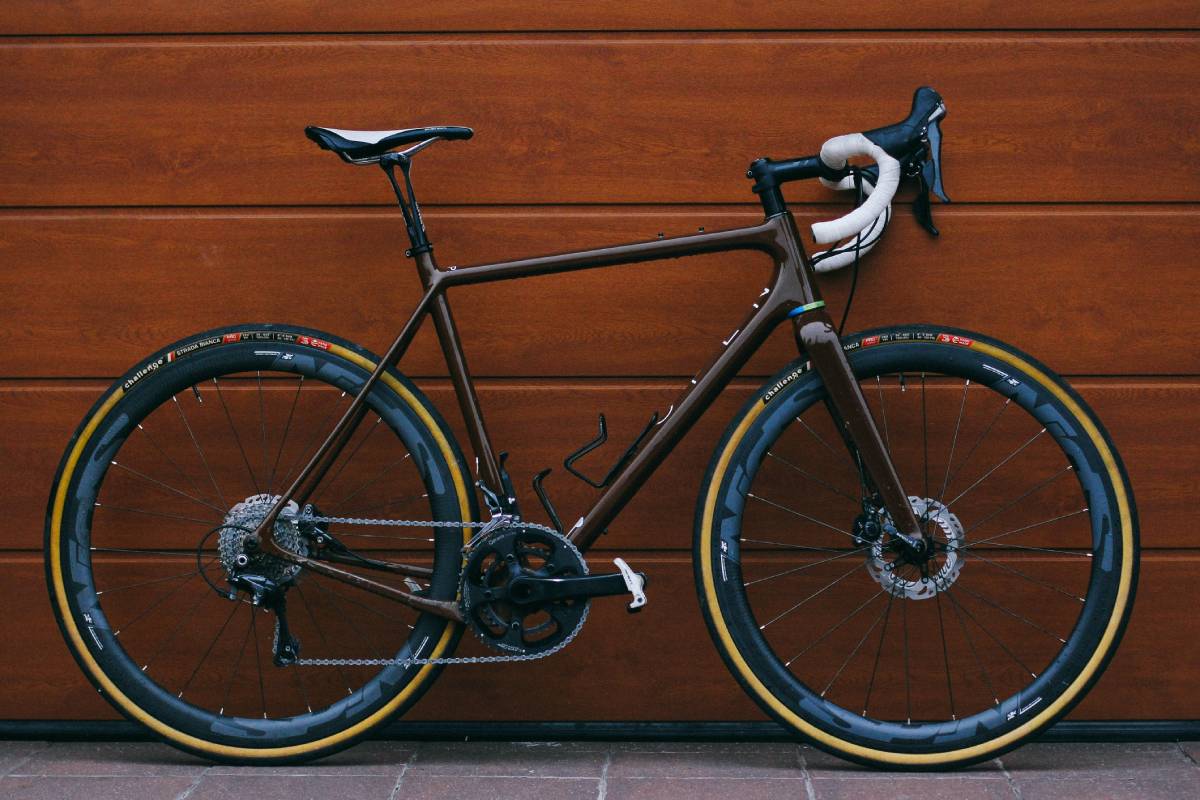
Carry-on: check with the airline. Checked: check with the airline. TSA’s bicycle page gives the same verdict for both bags and no other text, because a bike is not a security problem, it is a size problem. Every airline accepts bikes as checked baggage under its own rules: a box or hard case, pedals removed, handlebars turned, tires often deflated, and either a standard bag fee or a sporting-goods fee. Most carriers cap the box at a stated size and weight, and the fee can run from the price of a normal checked bag to well over a hundred dollars, so read the airline’s page before you book.
- Folding bikes have no separate TSA entry. Folded into a bag that meets the airline’s checked size, they travel as ordinary luggage and usually avoid the bike fee; a folded bike will not meet carry-on size on any US airline.
- Electric bikes are a different item, covered under scooters and e-bikes: the battery rule, not the bike rule, decides.
- CO2 inflators, multitools with blades and bike pumps each have their own answer below; pack them separately from the bike box so a search does not mean unpacking the bike.
Bicycle pumps
Carry-on: yes. Checked: yes. A hand pump or floor pump is allowed in both bags with no instructions on TSA’s page. A mini pump in a carry-on is fine; a full floor pump is awkward in the cabin only because of its length. Pumps with a built-in pressure gauge are no different. Electric pumps are covered in their own section below because of the battery.
CO2 cartridges
Carry-on: no. Checked: no. This is the one bike item that does not fly. TSA’s CO2 cartridge page says you can only carry an empty compressed gas cylinder on a plane, and it must be clearly visible to the officer that the cylinder is empty, which for a sealed threaded cartridge is impossible. The FAA’s own chart allows up to four small nonflammable cartridges in checked bags under hazmat rules, but its page states the override plainly: TSA security rules prohibit the carriage of all compressed gas cylinders and cartridges and only allow them when empty. Full cartridges are taken at the checkpoint and removed from checked bags.
- Buy cartridges at your destination. Bike shops everywhere stock the standard 16 g threaded size.
- The inflator head (the valve that screws onto the cartridge) is fine in either bag; it is the cartridge that is banned.
- Life vest cartridges are the one exception TSA lists: a life vest with up to two cartridges installed plus two spares is allowed, but only with the vest.
Bicycle locks
Carry-on: yes. Checked: yes. TSA has no page for bike locks, but it has one for bicycle chains, allowed in both bags with no limit, and a cable lock or U-lock is the same class of object. A heavy U-lock in a carry-on can draw the bludgeon question from an officer, since it is a solid steel bar, and the published rule gives the officer discretion; a lighter cable or folding lock in the carry-on and the U-lock in the checked bag avoids the conversation. Combination locks and keyed locks are treated the same.
Electric air pumps
Carry-on: yes. Checked: yes, with the battery installed and the pump switched off. TSA has no page for electric pumps. The closest entry, an air mattress with a built-in pump, is allowed in both bags with the usual airline size note, and the rest follows from the FAA battery rule. A rechargeable tire inflator or mattress pump is a portable electronic device with a lithium battery: the FAA says such devices should be carried in carry-on bags, and if they go in checked luggage they must be completely powered off and protected from switching on. A pump with a removable battery pack is simpler: the battery goes in the carry-on, always, and the pump body goes anywhere.
Most consumer inflators are well under the 100 Wh limit; the rating is printed on the battery. Pumps that run off a car’s 12 V socket with no battery of their own are ordinary appliances and travel in either bag with no battery rule at all.
Scooters, e-scooters and e-bikes
Kick scooter: check with the airline. Electric: only if the battery is 100 Wh or less, and most are not. TSA has no page for scooters of either kind; its closest entries, Segways and hoverboards, say the item is allowed through the checkpoint and tell you to check with the airline. The rule that decides is the FAA’s entry for portable recreational vehicles powered by lithium-ion batteries. It allows them to be carried like other battery devices in either bag, requires airline approval for any battery over 100 Wh, lets the airline refuse them or restrict them to carry-on, and states that a device with a battery over 160 Wh is prohibited as carry-on or checked baggage. The FAA adds that most unicycle scooters and Segway-type scooters have a battery that exceeds 160 Wh and are therefore prohibited.
- E-scooters commonly carry 250 to 500 Wh batteries. Over 160 Wh, there is no way to fly with the battery. Some riders ship the scooter or fly with a scooter whose battery is removable and leave the battery home.
- E-bikes are not named on the FAA chart, but the same portable-recreational-vehicle entry and the same Wh limits apply, and e-bike batteries are almost always 300 Wh or more. The 300 Wh allowance that exists for mobility aids applies to wheelchairs, not to e-bikes.
- Hoverboards are the item airlines banned by name years ago, and most still refuse them outright regardless of battery size.
- Kick scooters with no battery are a size question. A folded adult scooter is longer than most carry-on sizers, so check the airline’s carry-on dimensions or check it as a bag.
Skateboards and longboards
Carry-on: yes. Checked: yes. TSA’s skateboard page says skateboards are allowed in carry-on bags and asks you to check with your airline for size or weight restrictions; longboards have their own page with the same two yeses. In practice a standard deck fits most overhead bins and some airlines count it as the carry-on item, while a longboard is over the length limit on most carriers and goes in a board bag as checked luggage. Electric skateboards have no TSA page and follow the battery rule in the scooters section above: under 100 Wh it is a carry-on device, over 160 Wh it does not fly.
Helmets
Carry-on: yes. Checked: yes. Bike, skate, ski, climbing and football helmets are all allowed in either bag; TSA keeps a general helmets page and a football helmets page and both say yes with no conditions. The practical argument for the carry-on is that a helmet is built to take one impact and then be replaced, and a checked bag gets more than one. Wear it, clip it to the outside of the bag, or pack it with soft items inside the shell. A helmet with a built-in rechargeable light or camera mount is a battery device in that respect and goes in the carry-on.
Golf clubs and golf balls
Clubs: checked only. Balls and tees: yes in both bags. TSA’s golf clubs page is a plain no for carry-on and yes for checked; it is the bludgeon rule, and it applies to a single putter as much as to a full bag. Golf balls and golf tees each have a page allowing them in either bag with no limit. A travel golf bag with a hard top goes as checked luggage under the airline’s sporting-goods rules, usually for the price of a standard checked bag, and most airlines do not count it as oversize even though it is longer than a suitcase.
Rangefinders, GPS watches and electric push-cart batteries follow the battery rule: in the carry-on, especially spare batteries. A divot tool with a blade-like edge is a judgment call at the checkpoint; a plain fork-style tool is not.
Fishing rods and tackle
Rods: yes in both bags. Tackle: small lures yes, large hooks and knives checked only. TSA’s fishing pole page allows rods in carry-on and checked bags and asks you to confirm with the airline that the rod fits the carry-on size limit, which a one-piece rod never does and a four-piece travel rod in a tube usually does. For tackle, the page is specific: sharp tackle that may be considered dangerous, such as large fish hooks, should be sheathed, securely wrapped and packed in checked bags, while expensive reels and fragile tackle that poses no threat, such as small flies, can go in the carry-on.
- Fillet knives, bait knives and multitools with blades fall under TSA’s knives page: not allowed in carry-on, allowed in checked bags, sheathed.
- Reels are allowed anywhere and belong in the carry-on, since they are the expensive part.
- Spear guns are checked-bag only.
- Live bait and fish are their own problem: TSA allows live fish in a clear container in carry-on but not in checked bags, and the airline may say no regardless.
- Rod tubes over the airline’s checked length are oversize; many airlines exempt fishing rods from the oversize fee if they are under a stated length, so check the sporting-goods page.
Surfboards, skis and snowboards
Carry-on: no, for size. Checked: yes. TSA has no page for surfboards or skis; its snowboard page allows them in both bags and defers to the airline for size and weight, and the same applies to every board and ski. None of them is a security item, so the whole question is the airline’s oversize policy. Most US airlines accept surfboards, skis and snowboards as checked sporting goods, some for a standard bag fee and some for a surfboard-specific fee that rises with length. Boards over a certain length (often around 9 to 10 feet) are refused by some carriers outright.
- Padded board bags are the difference between a board arriving and a board arriving dinged. Fins out, nose and tail padded, leash and wax packed elsewhere.
- Ski and snowboard bags usually count as one checked item, and many airlines allow a boot bag with them as part of the same allowance.
- Ski poles are a different rule: TSA bars them from the cabin, so they ride in the ski bag.
- Surf wax is a solid; sunscreen is a liquid for the quart bag.
Snowshoes
Carry-on: yes. Checked: yes. TSA’s snowshoes page allows them in both bags with no conditions, crampon-style teeth and all. They are bulky rather than dangerous. Strap the pair together with the teeth facing inward and slide them along the back of a checked bag, or carry them as a personal item if the airline’s size allows. Snow cleats and microspikes that stretch over a boot are a separate TSA item with a different answer, covered next.
Crampons and microspikes
Crampons: yes in carry-on at the officer’s discretion, yes in checked. Snow cleats and microspikes: checked only. This is a case where the names matter. TSA’s crampons page says crampons are generally permitted in carry-on bags but that officers have the discretion to prohibit an item they feel may pose a security threat. TSA’s separate pages for snow cleats and shoe or snow spikes, the rubber-and-chain traction devices many hikers call microspikes, are a flat no for carry-on and yes for checked, with the bludgeon sentence attached.
The safe reading: put all foot spikes in the checked bag. If you must carry mountaineering crampons on, keep them in their case with point protectors on and expect the officer to look. Stepping through a checkpoint arguing that your microspikes are technically crampons is a losing conversation.
Ice axes and climbing gear
Ice axes and ice picks: checked only, sheathed. Rope, carabiners, harness, chalk: yes in both bags. TSA’s ice axe page is a no for carry-on and a yes for checked, with the instruction to sheath or wrap it so it cannot injure a baggage handler. Rope has its own page allowing it in either bag. Carabiners, quickdraws, cams, nuts, belay devices, harnesses and chalk have no TSA entry at all; none of them is sharp or a bludgeon, and they travel as ordinary metal hardware in either bag. A rack of cams and nuts is a dense tangle of metal on the X-ray, so expect a carry-on full of hardware to be opened and looked at.
- Nut tools have a hooked metal end and are a judgment call at the checkpoint; put them with the axe in the checked bag.
- Chalk is a powder. A full bag of loose chalk over 12 ounces goes in a separate bin for X-ray under TSA’s powder rule; a chalk ball or a small bag does not.
- Knives of any kind are checked-bag only.
- Headlamps and avalanche beacons are battery devices: carry-on, with spare batteries carry-on only.
Trekking poles
Carry-on: blunt tips only, and the airline has a say. Checked: yes. TSA updated its hiking poles page in 2025 and the wording is exact: blunt-tipped hiking poles are allowed in carry-on or checked bags and must be screened like other property; sharp-tipped hiking poles are not allowed as carry-on items; and you should check with your airline to see if they allow hiking poles as carry-on. Walking sticks have an identical page. Carbide tips count as sharp. Rubber tip protectors over the carbide make the pole blunt for screening purposes, and the collapsed poles then fit most carry-on bags.
The simplest approach is to collapse the poles, cover the tips, and pack them inside the carry-on rather than strapped to the outside, where they read as sticks. If you are checking a bag anyway, the poles go in it and the question disappears.
Tents, poles and stakes
Tent body: either bag, size permitting. Poles: either bag. Stakes: checked only. TSA’s tent page says you may transport a tent in carry-on or checked bags, that you should check with the airline that a carry-on tent fits the bin or under-seat space, and in one unambiguous sentence that tent stakes must be packed in checked bags. Tent poles have their own page: generally allowed in both bags, with the officer’s final say. Tent spikes have their own page too: no for carry-on, yes for checked, sheathed or wrapped.
- Carry-on campers with no checked bag either buy stakes at the destination, mail them ahead, or use rocks and deadman anchors. A backpacking tent minus stakes fits a carry-on easily.
- Shock-corded poles fold to around 16 to 18 inches and go in or alongside the tent bag; the officer may unroll the bag to look.
- Mallets and hatchets for driving stakes are checked-bag only under TSA’s axes and hatchets page.
Sleeping bags
Carry-on: yes. Checked: yes. TSA’s sleeping bag page is a plain yes for both bags. A compressed down bag in a stuff sack takes up a third of a carry-on and reads as a soft blob on the X-ray; a bulky synthetic bag is a checked-bag item for size alone. Sleeping pads are the same: allowed anywhere, and a pad with a built-in hand pump has no battery to worry about, while an electric pump follows the pump rule above. Airlines occasionally let a sleeping bag ride as a personal item if it is small enough to go under the seat.
Camping lanterns, stoves and fuel
Battery lanterns: yes in both bags, spares in carry-on. Stoves and fuel lanterns: yes only if empty and cleaned. Fuel of any kind: no. TSA has no page for lanterns, so each kind follows the rule for what powers it. A battery lantern is a flashlight for screening purposes, allowed anywhere, with any spare lithium batteries in the carry-on. A propane or liquid-fuel lantern is camping equipment that has held fuel, and TSA’s camp stove page gives the rule: allowed in carry-on or checked bags only if they are empty of all fuel and cleaned so that no fuel vapors or residue remain. The FAA says the same, that camping stoves and equipment with no residual fuel, vapors or other hazardous materials are allowed, and adds a warning that some airlines may not accept used camping equipment that has had fuel in it regardless of how well it has been purged.

Fuel does not fly
Propane canisters, butane canisters, isobutane mix cartridges, white gas, alcohol fuel, solid fuel tablets and lighter fluid are all prohibited in both carry-on and checked bags. TSA’s propane, butane and fuels pages each say no for both bags, and the FAA’s fuels page states that all forms of camp stove fuels are forbidden. A sealed, unused canister is still a canister of fuel. Buy fuel where you land; outfitters near any trailhead airport stock the common canister sizes, and several will take back partials.
- Cleaning a stove to fly: run it dry, remove the canister, let it air for a day, wipe the burner, and pack it in a clear bag. An officer who smells fuel can refuse it, and the published rule backs them.
- Brand-new stoves in retail packaging have never held fuel and raise no questions.
- Bear spray is in the same category as fuel: TSA says no for both bags, and the FAA explains that most bear sprays exceed the 4-ounce cap that would otherwise allow one self-defense spray in a checked bag. Buy it at the destination and leave it there.
Folding chairs
Carry-on: yes, if it fits. Checked: yes. TSA publishes no entry for folding chairs, camp chairs or stadium seats; we checked the full item list. A chair is neither sharp nor a battery nor fuel, so it travels as an ordinary bulky item under the airline’s size rules. A backpacking chair that packs to the size of a water bottle fits any carry-on. A full camp chair in its sleeve is over the carry-on length on most airlines and goes as checked luggage, sometimes as a separate item with its own fee. Beach chairs with aluminum frames are the same case.
Scuba tanks and dive gear
Tanks: only empty, with the valve removed. Pressurized tanks: banned in both bags. Regulators, BCDs, masks, fins, wetsuits: yes anywhere. Dive knives: checked only. TSA has no scuba page, but its compressed gas rules cover tanks exactly. The small compressed gas cartridges page says the regulator valve must be completely disconnected from the cylinder so the cylinder has an open end the officer can look into; officers will not remove the valve themselves, and a sealed cylinder is prohibited regardless of the pressure gauge reading. TSA’s page for fire extinguishers and other compressed gas cylinders is a no for both bags. On the hazmat side, the FAA says pressurized scuba tanks are regulated once they reach 200 kPa (about 29 psi), that empty tanks or tanks under that pressure are not restricted, and that airlines and screeners may require valves to be opened all the way for inspection.
- Flying with your own tank means draining it fully, unscrewing the valve, and packing valve and tank separately so the open neck is visible. Many divers rent tanks instead; every dive operator has them.
- Regulators and dive computers have no TSA entry and no restriction. Carry them on; they are the fragile, expensive part.
- Dive knives and line cutters are knives: checked only, sheathed.
- Dive lights are battery devices: carry-on, spares carry-on only.
Parachutes
Carry-on: yes. Checked: yes, with conditions. TSA’s parachute page is unusually detailed. You may transport parachutes, with or without automatic activation devices, in carry-on or checked bags. They should always be packed separately from other baggage. If an officer decides a bag must be opened to inspect the parachute, you must be present to assist; if you are not in the screening area you will be paged, and if you do not show up the parachute will not be allowed on the plane. TSA encourages passengers with parachutes to add 30 minutes to the airline’s recommended arrival window, and it is not responsible for repacking.
Skydivers carry rigs on for exactly this reason: a carry-on inspection happens with you standing there, while a checked-bag inspection happens on the other side of a wall. A rig in its own bag, with nothing else packed around it, screens fastest.
Dumbbells and kettlebells
Carry-on: expect no. Checked: yes, within the weight limit. TSA has no page for dumbbells, kettlebells or weight plates. The closest published rule is the one on the bowling balls page, a no for carry-on with the bludgeon sentence, and a 20-pound dumbbell is a more obvious bludgeon than a bowling ball. Plan on checked luggage. The constraint there is the airline’s weight limit: a 50-pound allowance disappears fast, and overweight fees on US airlines start at the 51st pound. Two 25-pound dumbbells and a change of clothes is an overweight bag.
Travelers who train on the road mostly solve this with gear that is light to fly and heavy on arrival: water-fillable dumbbells, sandbags filled at the destination, and resistance bands, covered next.
Resistance bands
Carry-on: yes. Checked: yes. TSA has no entry for resistance bands, and it does not need one; a rubber band is not sharp, heavy, powered or pressurized. TSA’s pages for yoga mats and foam yoga blocks, the nearest fitness items, are a yes for both bags, and bands fall under the same logic. Tube bands with metal carabiner clips and handles screen as a small cluster of metal and may get a glance. A door anchor is fine. Pack the set in its pouch so the officer can lift it out in one piece.
Yoga mats
Carry-on: yes. Checked: yes. TSA’s yoga mat page allows them in both bags with no conditions. The only question is whether the airline counts a rolled mat as your carry-on, your personal item, or neither. A mat strapped to the outside of a backpack is usually tolerated; a mat carried loose is sometimes counted as the personal item. A travel mat that folds flat slides into a suitcase and avoids the question. Foam blocks and straps are allowed anywhere.
Carts and wagons
Carry-on: check with the airline. Checked: yes. TSA has no entry for folding wagons, beach carts or luggage carts, and no FAA rule touches them. Its closest pages, child car seats and baby carriers, allow the item in either bag and tell you to confirm with the airline that a carry-on item fits the bin or under the seat. A folding wagon almost never meets carry-on size and travels as a checked item; some airlines charge for it as a separate bag. Strollers are a different and much friendlier case: airlines gate-check them free and hand them back at the aircraft door, covered in our stroller guide. Wheelchairs and mobility scooters have their own rules and their own battery allowances, in our wheelchair guide.
Bats, sticks, rackets and balls
A quick round-up of the sports items TSA lists that did not have a post of their own, all with dedicated TSA pages:
- Baseball bats, cricket bats, hockey sticks, lacrosse sticks, ski poles, canoe and kayak paddles, bowling balls: no in carry-on, yes in checked. The bludgeon rule.
- Tennis rackets, badminton rackets, golf balls, baseballs, basketballs, footballs: yes in both bags. Deflate inflatable balls so pressure changes do not stress the seams.
- Ice skates and rollerblades: yes in both bags; TSA’s skates page names both.
- Axes and hatchets, spear guns: checked only.
- Helmets, pads and mouthguards: yes anywhere.
Frequently asked questions
Can I bring a bike on a plane?
Yes, as checked baggage under the airline’s rules: boxed or in a hard case, pedals off, handlebars turned, and usually a bike or sporting-goods fee. TSA’s verdict is check with airline for both bags because a bike is a size question, not a security one.
Are CO2 cartridges allowed on a plane?
No. TSA allows compressed gas cartridges only when they are visibly empty, which a sealed CO2 cartridge never is. Full cartridges are prohibited in carry-on and checked bags. Buy them at your destination.
Can I fly with an electric scooter or e-bike?
Only if the battery is 100 Wh or less, or up to 160 Wh with airline approval. The FAA prohibits any lithium battery over 160 Wh in both bags, and most e-scooters and e-bikes are well above that. Many airlines refuse them regardless.
Can I take a skateboard as a carry-on?
Yes. TSA allows skateboards and longboards in carry-on and checked bags, subject to the airline’s size and weight limits. Electric skateboards follow the lithium battery rule.
Can I bring fishing hooks in my carry-on?
Small lures and flies, yes. TSA says large fish hooks and other sharp tackle should be sheathed, wrapped and packed in checked bags. Fillet knives are checked only. Rods are allowed in either bag if they fit the airline’s carry-on size.
Are crampons allowed in a carry-on?
Mountaineering crampons are generally permitted in carry-on at the officer’s discretion. Snow cleats and microspikes are not allowed in carry-on and go in checked bags. Ice axes are checked only.
Can I bring trekking poles on a plane?
Blunt-tipped poles are allowed in carry-on and checked bags; sharp-tipped poles are checked only. TSA also tells you to check whether your airline accepts poles as carry-on. Rubber tip covers over carbide tips make them blunt for screening.
Can I take a tent in my carry-on?
The tent body and poles, yes, if they fit your airline’s carry-on size. Tent stakes must be packed in checked bags, in TSA’s words. Carry-on-only campers buy or mail stakes ahead.
Can I fly with a camping stove?
Yes, only if it is empty of all fuel and cleaned so no vapors or residue remain, in either bag. All stove fuel, including sealed propane and butane canisters, is prohibited in both bags, and some airlines refuse used stoves no matter how clean.
Can I bring a scuba tank on a plane?
Only empty, with the valve removed so the officer can see into the open cylinder. A pressurized tank is prohibited in both bags. Regulators, computers, masks and fins have no restrictions; dive knives are checked only.
Can I bring dumbbells in a carry-on?
Expect no. TSA has no dumbbell page, but its bludgeon rule bars heavy swingable items such as bowling balls from the cabin. Check them, and watch the 50-pound weight limit. Resistance bands and water-fillable weights are the carry-on alternatives.
Can I take a parachute on a plane?
Yes, in carry-on or checked bags, packed separately from other items. If TSA needs to open it you must be present or it will not fly, so TSA suggests arriving 30 minutes earlier than the airline recommends.
Official references: TSA’s What Can I Bring? list (entries for bicycles, bicycle pumps, bicycle chains, CO2 cartridge, small compressed gas cartridges, hoverboards, Segways, skateboards, longboards, helmets, golf clubs, golf balls, fishing pole, small fishing lures, knives, snowboards, snowshoes, crampons, snow cleats, shoe and snow spikes, ice axes, rope, hiking poles, tent, tent poles, tent spikes, sleeping bag, camp stoves, propane, butane, fuels, bear spray, fire extinguishers and other compressed gas cylinders, parachutes, bowling balls, yoga mat, foam yoga blocks, baseball bats, hockey sticks, lacrosse sticks, ski poles, tennis rackets, skates, axes and hatchets); the FAA PackSafe pages for lithium batteries, portable recreational vehicles, small compressed gas cylinders, outdoor equipment, fuels and sprays and repellents. All checked on November 8, 2026. TSA has no entry for surfboards, skis, folding bikes, bike locks, electric pumps, scooters, lanterns, folding chairs, scuba tanks, regulators, dumbbells, resistance bands, carabiners or wagons, and the text above says so where it matters.
For anything with a battery, start with Electronics on a Plane. For liquids and toiletries, see Toiletries and Liquids on a Plane, and for food and drinks, Food and Drinks on a Plane. For everything else, What Can You Bring on a Plane? 9 Essential TSA Rules links to the guides for tools and unusual items.
Author
Can I bring something else on a plane? Search TSA rules ›