

Reader-supported. We may earn a commission on purchases through our links. Disclosure ›
Your luggage being lost or delayed sits below 1% of all checked bags, but when it’s your bag, the statistic doesn’t matter. The question becomes how long does it take to find lost luggage, and what you should do in the meantime.

I had a suitcase delayed during a 3-week trip to China. Mine came back in three days with everything intact, which is the typical outcome. The process is still annoying, so here’s the full breakdown of timelines, what to do at the airport, and how to actually get reimbursed.
How Long Does It Take to Find Lost Luggage?
Most lost bags are returned within 24-48 hours. An Association of European Airlines study found that around 85% of misdirected luggage is back in the owner’s hands within two days. With improved tracking technology, the average is now closer to 36 hours.
Behind those numbers:
- Same-day returns: Possible if the bag missed your connection but caught a later flight to the same destination. Some travelers receive their bag within 4-6 hours.
- 1-3 day returns: The most common outcome. Bag is found, identified, and shipped to your hotel or home address.
- 3-7 day returns: Bag was sent to the wrong country or airport, or labels were damaged. Recovery still happens but takes longer.
- 14-21 days: The point at which most airlines officially declare a bag lost. Only about 7% of misdirected bags are never recovered.
The most common cause of a bag going missing? Tight connections. Roughly 46% of mishandled luggage cases involve a layover where you made the connection but your bag didn’t. The next most common is general mishandling at the origin airport.
What to Do If Your Luggage Is Lost
The single most important rule: do not leave the airport before filing a report. Once you walk out, the airline can claim you accepted the missing bag and refuse compensation.
- Go straight to the airline’s baggage service desk. Usually located near the carousels. If you can’t find it, ask any airline employee for the baggage office.
- Stay calm with the staff. They process dozens of these claims a day. Being aggressive doesn’t get your bag back faster, and the agent has discretion on overnight kits and reimbursements.
- File a Property Irregularity Report (PIR). Describe the bag’s appearance (brand, color, size, distinguishing features) and the contents in detail. Modern airline systems search a global database, and good descriptions dramatically improve match rates.
- Get the file reference number and a copy of the report. You’ll need both for online tracking and any compensation claim.
- Ask about an overnight kit and reimbursement for essentials. Many airlines provide toiletries on the spot and reimburse expenses for clothes and toiletries while you wait. Get the maximum reimbursement amount in writing.
- Save every receipt. Toothbrush, underwear, shirt, anything you buy because of the missing bag. Reimbursement requires proof.
What to Do If Your Luggage Is Delayed
Delayed and lost are technically different. Delayed means the airline knows where your bag is and is working to get it to you. Lost means they don’t know where it is yet.
For a delayed bag, the process is the same as the lost flow above: file a PIR, get the reference number, ask about reimbursement, save receipts. The good news is that delayed bags almost always come back within 24-72 hours.
If you’re traveling on a tour package, your tour operator may handle the entire claim for you. If they offer, take the help. They deal with airlines all the time.
When your bag does arrive, get a second written confirmation of the delay length. This document determines your final compensation amount.
What to Do If Your Luggage Is Damaged
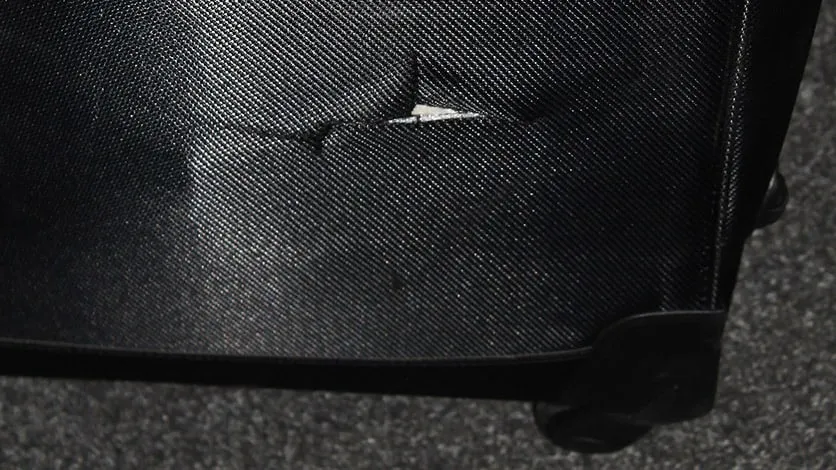
If your bag arrives damaged, document it before you leave the airport. Photos of every defect, with the airport baggage carousel visible if possible.
Airlines distinguish between two damage categories:
- Wear and tear (no compensation): Scuffs, light scratches, dents to the frame, mark stains. Airlines won’t cover these no matter how new or expensive the bag is.
- Functional damage (covered): Broken wheels, broken handles, torn fabric, broken zippers, anything that makes the bag unfit for travel. The airline must repair, replace, or reimburse.
File a damage claim at the baggage office before leaving. Like with lost luggage, claims filed after you leave the airport are much harder to win.
One important caveat: airlines generally don’t cover damage to contents inside checked bags. Broken souvenirs, damaged electronics, cracked toiletry bottles. If you’re packing fragile or valuable items, put them in your carry-on.
Tip: If your bag keeps getting damaged in transit, an aluminum suitcase will outlast almost anything checked luggage handling can throw at it. The premium aluminum cases (Tumi, Rimowa) cost a fortune, but the [amazon link=”B06Y5CKNV7″ title=”Travelking aluminum carry-on”] gives you 80% of the durability at a fraction of the price.
Curious whether the premium price tag pays off? Our Tumi vs Samsonite comparison weighs durability against cost.
What to Do If Your Luggage Is Stolen
Actual luggage theft is rare, but it happens. Before assuming theft, file a PIR for delayed luggage first. Airlines have detailed tracking, and the most likely explanation is that your bag is sitting at another airport, not stolen.
If after a few days the airline confirms the bag never made it onto a tracking system or shows up as scanned at an airport that doesn’t make sense, theft becomes likely. At that point:
- File a police report with local airport police. Some airlines won’t process theft claims without one.
- Document everything that was inside the bag. Receipts, photos, model numbers for electronics.
- Notify your travel insurance and credit card if either covered the trip. Both may offer reimbursement separate from what the airline pays.
How to Get Reimbursed for Lost Luggage
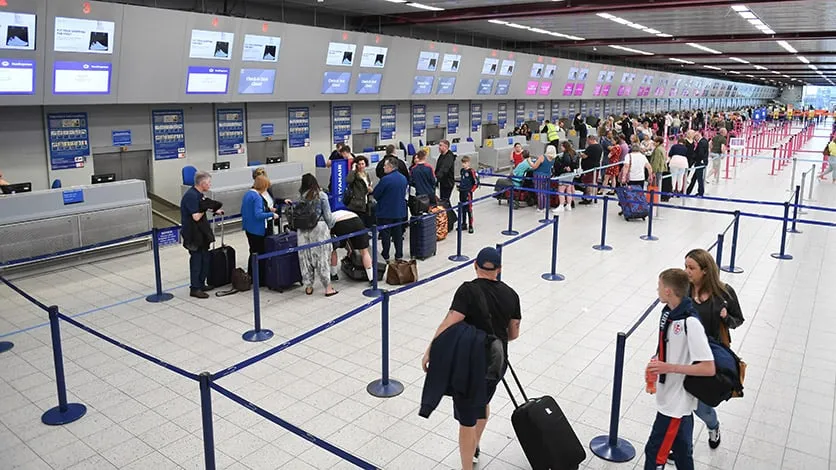
About 87% of US travelers don’t file a claim when their luggage is lost, damaged, or stolen. That’s leaving real money on the table. You have a legal right to compensation.
Maximum reimbursements:
- US domestic flights: Up to $3,800 per passenger (DOT limit, adjusted periodically).
- International flights covered by the Montreal Convention: Around 1,288 SDR (~$1,700 USD), per passenger.
- EU flights: Up to 1,300 EUR (~$1,400 USD).
Claim deadlines:
- Damaged luggage: 7 days from receipt
- Missing or damaged contents: 7 days from receipt
- Delayed or lost luggage: 21 days from the date the bag should have arrived
Reality check on what airlines actually pay:
- Airlines almost always pay less than the maximum. They know the average bag value and resist paying more.
- You’ll need receipts for higher-value items. A 5-year-old camera without a receipt may not be reimbursed at all.
- Reimbursement is based on depreciated value, not retail. A $300 suit you bought two days ago might get you $150 back.
- Valuables, fragile items, and perishables aren’t covered. Airlines have explicit exclusions for jewelry, electronics over a certain value, art, and similar.
Always check your credit card and travel insurance. Many premium credit cards (Chase Sapphire Reserve, Amex Platinum) include lost luggage and delay coverage that can stack on top of airline compensation. Travel insurance from a third-party provider is even more comprehensive.
How to Prevent Losing Luggage in the Future
You can stack the odds in your favor:
- Book layovers of at least 90 minutes. The single biggest cause of lost luggage is bags missing connections. 60-minute layovers are dangerous, anything under 45 minutes is asking for it.
- Check in 90+ minutes before departure. Late check-ins mean the bag may not make it onto the loading cart in time.
- Remove old airport stickers. Stickers from previous flights confuse baggage handlers and routing systems.
- Use a sturdy luggage tag. Paper tags from the airline can tear off. A [amazon link=”B019J1YH2M” title=”durable stainless steel luggage tag”] with your name, email, and phone stays on the bag.
- Use an Apple AirTag or Tile. A $30 tracker lets you see exactly where your bag is at any time. Major airlines including Delta, United, and Lufthansa now allow you to share AirTag location with their lost luggage teams.
- Pick a distinctive bag. A bright color or pattern makes the bag instantly identifiable. If your bag is plain black, add a [amazon link=”B089761MQG” title=”bright luggage cover”] or a colorful strap.
- Secure loose straps. Loose handles and straps catch on conveyor belts and can rip off, sometimes with the bag.
- Keep valuables in your carry-on. Laptops, jewelry, medications, and anything irreplaceable should never be in checked baggage.
What Happens to Truly Lost Luggage?
If your luggage is unclaimed and the owner can’t be identified, here’s what typically happens:
- 5 days at the arrival airport. The bag stays at the terminal in case the owner returns or is identified.
- 60-90 days in airline storage. Bag is shipped to a central warehouse where staff search for any identifying clues.
- Sold, donated, or auctioned. After the search period, airlines either sell unclaimed bags in bulk to resale partners, donate to charity, or auction them. The Unclaimed Baggage Center in Alabama is the most famous destination, where auctioned bags get resold to the public.
Airlines actually lose money on lost luggage because reimbursements (up to $3,800 per passenger) typically exceed what bags fetch at auction. That’s why they invest heavily in tracking technology.
Lost Luggage Statistics
According to SITA, the global mishandled bag rate has dropped dramatically over the past 15 years:
- 2007: 18.88 bags lost per 1,000 passengers
- 2018: 5.69 bags lost per 1,000 passengers
- Current rate: ~5.5 bags per 1,000 passengers (about a 70% drop from 2007)
Reasons bags get lost (% of mishandled cases):
- Missed connections: 46%
- Failure to load: 16%
- Other (ticketing errors, security holds, bag switches): 16%
- Airport, customs, or weather restrictions: 9%
- Tagging errors: 5%
- Arrival mishandling: 5%
- Loading errors: 3%
Bottom line: your odds of permanently losing a bag are roughly 1 in 2,500.
Worst Airlines for Lost Luggage
LuggageHero compared mishandled bag rates across major US airlines. The gap between the best and worst is significant:
- Best: Allegiant Air, Hawaiian Airlines, Southwest Airlines (all under 0.3% mishandled)
- Worst: American Airlines, Envoy Air, Republic Airways (over 0.5% mishandled)
- Industry average: ~0.4%
Worst Airports for Lost or Stolen Luggage
- JFK International (New York): Has historically held the US record for baggage theft. 2012 reports cited up to 200 theft cases per day.
- Heathrow (London): The UK’s busiest airport, and the one with the most reported luggage issues in the country.
- Santorini Thira International (Greece): Tiny airport, massive tourist load. Carousel chaos and frequent delays.
- Juba International (Sudan): Underdeveloped infrastructure, high theft rates.
- Caracas Simón Bolívar (Venezuela): Notorious for theft, including from checked bags.
- Madrid-Barajas (Spain): High volume, high mishandling rate during peak season.
Frequently Asked Questions About Lost Luggage
What counts as lost luggage?
A bag is considered lost when it hasn’t been returned to you within a reasonable time after arrival, usually due to mislabeling, routing errors, or being left behind at the origin or connecting airport. Airlines officially declare a bag lost only after 14-21 days of failed search.
How long does it usually take to recover lost luggage?
Most lost bags are returned within 24-48 hours. The current global average is around 36 hours from when the bag was reported missing. Bags that take longer than 5 days to find drop into a smaller pool, but recovery still happens for most of them within 14 days.
What should I do if my luggage is lost?
File a Property Irregularity Report (PIR) at the airline’s baggage service desk before leaving the airport. Get the file reference number, a copy of the report, and ask about overnight kits and reimbursement. Don’t leave the airport without a PIR. Without it, claiming compensation gets much harder.
Will I be compensated while my luggage is delayed?
Most airlines reimburse reasonable expenses for essentials (clothes, toiletries) while you wait. Save every receipt, ask for the maximum reimbursement amount in writing at the time you file the PIR, and submit receipts within the airline’s claim window.
What if my luggage is never found?
After 14-21 days, the airline officially declares the bag lost and you can claim full compensation. US domestic flights cap reimbursement at around $3,800 per passenger. International flights under the Montreal Convention cap at about $1,700. EU flights cap at 1,300 EUR. You’ll need receipts for high-value items.
How can I reduce the chance of losing my luggage?
Five things help most: (1) book layovers of 90+ minutes, (2) check in 90+ minutes before departure, (3) remove old airport stickers, (4) use a durable luggage tag with current contact info, and (5) put an AirTag or Tile inside the bag so you can track it yourself.
Can I claim lost luggage on travel insurance?
Yes. Most travel insurance policies cover lost or delayed luggage, and many premium credit cards include lost luggage protection automatically. Both can stack on top of airline compensation, though you usually have to file with the airline first.
How long do airlines hold unclaimed luggage?
Bags typically sit at the arrival airport for about 5 days, then move to a central airline warehouse for 60-90 days. After that, they’re sold in bulk, donated to charity, or sent to auction houses like the Unclaimed Baggage Center in Alabama.